
Why Your New Paint Color Looks Perfect in the Store, and Wrong on Your Walls

Updated: Aug 3
You painted the living room. Then the bedroom. Then the kitchen. Every color looked great on the sample chip, but once it was on the walls, the interior felt disconnected.
That usually does not mean you picked bad colors. In most Woodbridge - Virginia homes from traditional colonials in Fairfax to newer townhomes and luxury renovations in Arlington, Alexandria, and Loudoun the real issue is that the palette was chosen room by room instead of as one connected system.
Choosing paint without an overarching strategy is a costly trap. It leads to wasted time, thrown-away money, and the immense frustration of paying for a complete repainting job later.
A professional-looking home does not happen by accident. It happens when the colors, undertones, light, and architecture all work together. Once you understand the five most common mistakes, it becomes much easier to protect your investment and create a palette that feels intentional, polished, and right for your home.

The 5 Paint Palette Mistakes Homeowners Make for your new paint
1. Choosing Colors Room by Room Without a Plan
This is the most common mistake, and it usually creates the fastest visual disconnect. When every room is selected in isolation, the home starts to feel like a collection of unrelated decisions instead of one cohesive space.
A bedroom might look beautiful on its own, but if it clashes with the hallway, kitchen, or adjoining living room, the entire floor plan feels off. This is especially noticeable in open-concept layouts and in traditional Virginia homes where rooms still connect visually through trim, sightlines, and transition areas. A high-end full home renovation can easily be devalued by a disconnected paint job.
The Solution: Start with one primary base neutral to anchor main living areas, hallways, and transition zones. From there, branch out into coordinated paint colors for secondary spaces like bedrooms or a dedicated home office. If you want to see how a complete structural transformation coordinates with a premium layout, read our story on How We Renovated a Living Room and Transformed It Into the Heart of the Home: A Functional Luxury Project in Virginia. The goal is always to make every structural change and color choice feel like part of the same design story.
2. Mixing Undertones Without Realizing It
This is one of the quietest and most frustrating home design problems. Two colors can both look like great neutrals in the store and still fight each other badly on the wall.
Every paint color has an undertone: warm, cool, or neutral. If your living room leans creamy and warm while the adjoining hallway shifts to a cold blue-gray, the layout will feel unsettled.
We recently rescued a beautiful property in Fairfax where the owner painted three adjacent spaces in what they assumed were matching neutrals. The living room pulled warm, the hallway looked cold, and the dining room turned a distracting purple-gray. By replacing the layout with a unified undertone family, we instantly restored a balanced, premium visual flow.
Not sure where to start with your palette? Book a free 15-minute color consultation.
📞 Call or Text: (571) 332-0968 golden touchVA
Step 1: Visualizing the Direction (Warm vs. Cool Whites)
Warm vs. Cool Whites: Choosing Your Blueprint
To build a successful whole home color scheme, you must commit to a single temperature direction based on your permanent finishes (flooring, countertops, and tile).

The Warm White Family: Utilizing soft yellow, cream, or beige bases, these shades are exceptionally reliable for compensating for the cool quality of northern daylight or overcast Virginia winters. Top architectural choices include Alabaster (SW 7008) and Snowbound (SW 7004).
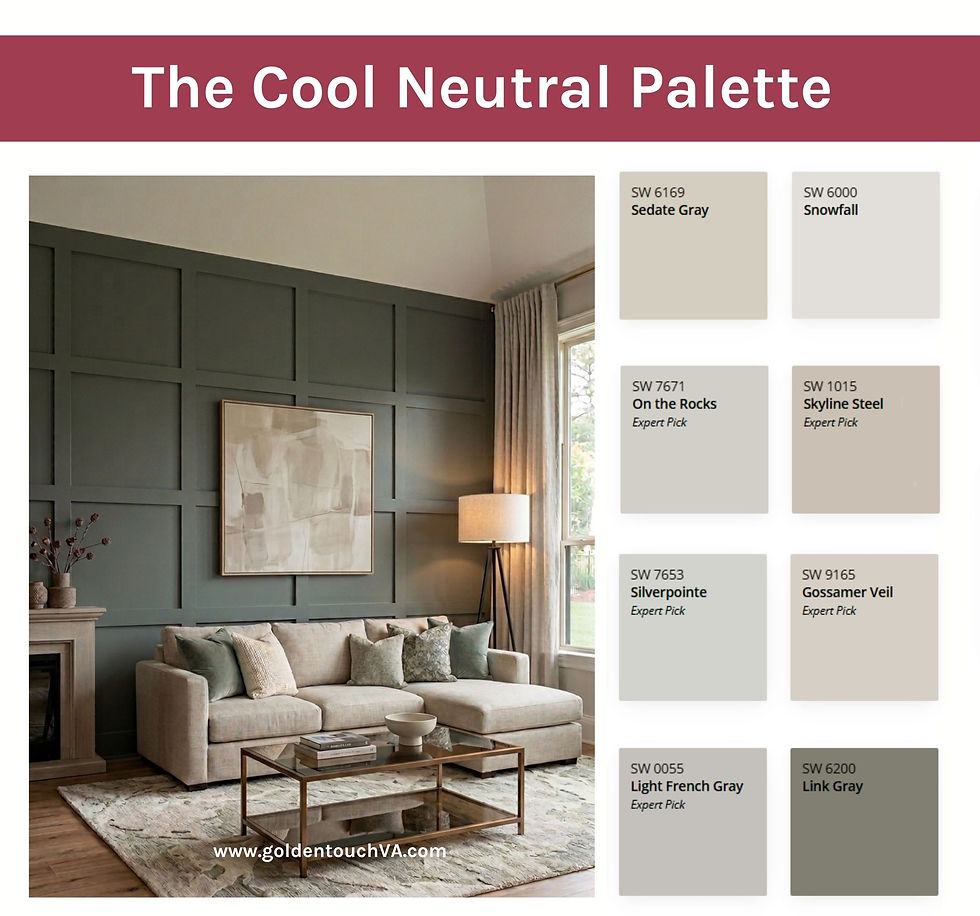
The Cool White Family: Leaning into subtle blue, green, or crisp gray bases, these selections create a highly luminous backdrop that allows dark hardware, white oak, and premium stonework to pop. Go-to designer choices include Extra White (SW 7006) and Gossamer Veil (SW 9165).
Step 2: Expanding Your Selected Family Correctly
Once your core direction is locked in, every coordinating wall or custom cabinet must follow that exact temperature profile to guarantee a seamless transition.

3. Using Strong Colors in Too Many Places
Deep colors like navy, forest green, charcoal, and terracotta can look stunning when used with intention. The problem is not the color itself — it is using too many bold colors without a clear hierarchy.
A dramatic room can work beautifully when it is treated as a feature space. A powder room, home office, den, or media room can absolutely carry a richer palette. Known as the Jewel Box effect, this strategy works beautifully in homes across McLean and Arlington. Because dark pigments absorb light, they visually soften the room's corners, creating a stunning sense of intimate, infinite depth.
But when every room competes for attention, the house loses calm and cohesion. The safest approach is to use strong colors strategically. Let them live in one focal wall, a kitchen island base, or cabinetry painted in a rich tone like Link Gray (SW 6200). Keep the larger shared spaces lighter so the home still feels balanced. Our painting and finishing services specialize in balancing these heavy tones with pristine neutral backgrounds so your home looks custom, not chaotic.
4. Ignoring How Light Changes Color
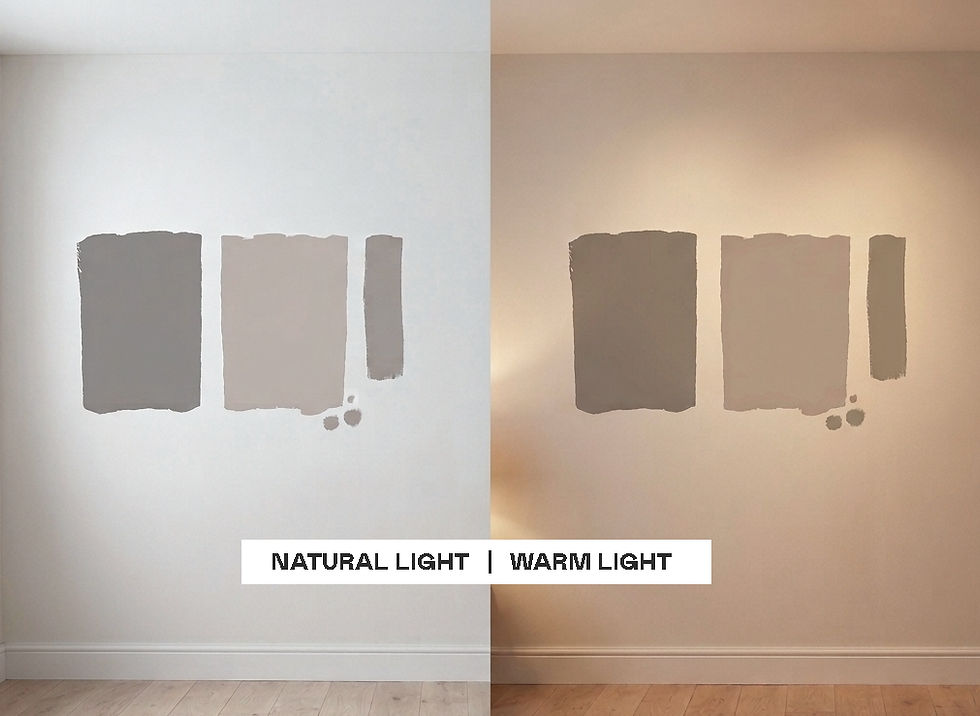
Paint does not stay still. It changes constantly depending on the room’s natural light, artificial light, direction of the windows, and even the time of day.
A color that looks soft and clean in the store can look dull, muddy, or unexpectedly green once it is on your wall. This is one of the biggest reasons homeowners feel disappointed after a paint job, even when the color looked perfect during selection.
The only reliable way to test a color is in the actual room it will live in. Never buy paint based on a store chip. Large sample boards are much better than tiny paper swatches. Review them at 8:00 AM, 2:00 PM, and 8:00 PM. If the color still feels right in morning light, afternoon light, and evening artificial light, you are much closer to a result you will love.
5. Choosing Trendy Colors That Fight the Architecture
Trendy colors can be inspiring, but they should never override the character of the home. A very cool, minimalist palette may look beautiful in a modern new build, but it can feel completely out of place in a traditional colonial, a home with detailed trim, or a property with classic proportions.
In Northern Virginia, many homes have strong architectural personalities. The best paint jobs respect that structure instead of trying to force a style that does not belong. A good color palette should enhance the house you already have, not fight it.
The 60-30-10 Rule: A Simple Framework That Works
To keep any interior palette balanced, professional designers rely on a structured proportion framework known as the 60-30-10 rule. This simple system gives the human eye a clear hierarchy, ensuring the home feels calm and intentional rather than busy.
60% Dominant Neutral: Applied to walls, ceilings, and large surfaces. This forms the foundational background canvas of the home.
30% Secondary Color: Present in larger furniture pieces, hardwood flooring, area rugs, or cabinetry. This adds necessary depth and variation.
10% Controlled Accent: Reserved for small, high-impact elements like cushions, artwork, a single accent wall, or a kitchen island. This introduces personality without causing visual fatigue.

How To Build a Better Palette
If you want a palette that feels professional, start with the things that are not changing:
Flooring.
Cabinets.
Countertops.
Tile.
Trim.
Lighting.
Then decide whether those finishes lean warm or cool. Once that direction is clear, choose a base color that supports the architecture and keep the rest of the palette in the same family. That one decision will solve more color problems than any trending swatch ever will.
For many Woodbridge-Virginia homes, the most successful paint updates are not dramatic. They are coordinated, subtle, and designed to make the whole home feel connected from one room to the next.
The Golden Touch Roadmap to a Cohesive Palette
If you want a straightforward, reliable method to map out your home's colors without overcomplicating the selection process, follow this sequence:
Step-by-step infographic roadmap by Golden Touch detailing how to plan a cohesive home color palette. Feel free to download or pin this guide to use as a blueprint for your next home improvement project!
Frequently Asked Questions (FAQ)
What is the best whole-house paint color?
There is no single perfect color for every home, but adaptable warm neutrals like Alabaster (SW 7008) or soft greiges like Repose Gray (SW 7015) are widely considered the most versatile choices. They bridge the gap between traditional and modern architecture while adapting beautifully to shifting daylight.
Should every room in a house be the same color?
No, but they should share the same undertone temperature. You can achieve excellent variety by using different shades of the same color family—such as using a lighter neutral for common hallways and a slightly deeper tone from the same family for a cozy bedroom or dining space.
What paint colors work best with original oak floors or trim?
Oak carries strong, natural golden-yellow undertones that naturally conflict with cool, blue-based grays. To keep the space feeling open and intentional, pair original wood finishes with rich warm off-whites or soft creams like Alabaster or Natural Linen. If you want a more modern look, having a professional team repaint your trim in a clean semi-gloss white is an excellent alternative to completely removing historic woodwork.
How do I make an open floor plan feel cohesive?
The most reliable method is to use a single dominant neutral paint color across all shared walls, hallways, and open spaces. Save variation for architectural transition zones, enclosed rooms, or structural features like a painted fireplace mantle or custom cabinet painting updates.
Your Home. Your Story.
At the end of the day, a beautiful home isn’t about following a rigid design catalog or pleasing an algorithm it’s about how you feel the moment you walk through your front door. It’s about creating a warm, welcoming backdrop where your family’s best memories will unfold.
Our mission at Golden Touch isn't to impose a style on you, but to listen to your vision, protect you from overwhelming guesswork, and bring your dream spaces to life. We provide the gentle, expert guidance you need to choose your colors with absolute peace of mind, and then we execute your vision with the flawless care and perfection your family deserves.
Ready to Fall in Love With Your Home All Over Again?
📞 Call or Text: (571) 332-0968
✉️ Email: info@goldentouchva.com
📍 Serving Fairfax, Arlington, Alexandria, Vienna, McLean, Falls Church, Springfield, Stafford, and Loudoun County.


Comments