
Preparing Your Home’s Exterior Before the First Freeze in Northern Virginia: A Practical Winterization Guide

In Northern Virginia, winter damage stems from a constant freeze-thaw cycle rather than heavy snowfall. Water that creeps in during a mild afternoon through a seam, an improperly placed downspout, or a cracked seal expands when temperatures drop overnight, worsening structural damage out of sight. Five key areas require attention before the first freeze: drainage, roofing, exterior plumbing, envelope sealing, and outdoor decks. In this region, temperatures typically dip below freezing for the first time between mid-October and mid-November.

The Freeze-Thaw Impact on Northern Virginia Homes
Water expands as it turns into ice. When liquid water collects inside a narrow gap in brickwork, siding, or deck board joints, the expanding ice acts as a wedge against the surrounding material. During the day, warmer weather melts the ice, allowing water to push deeper into the newly enlarged space. At night, the process repeats. With Mid-Atlantic weather swinging from mild afternoons to below-freezing evenings, this cycle recurs dozens of times each season.
Local soil conditions compound the problem. Much of Fairfax, Arlington, Alexandria, and Loudoun sits on Piedmont clay. Clay holds heavy moisture and expands against foundation walls when frozen. Poor surface drainage that might cause minor inconvenience elsewhere often leads to basement wall movement or structural water intrusion here.
Field Note: Downspout Placement in Springfield, VA
A Colonial-style house built in the 1980s in Springfield recently presented a clear example of this issue. The homeowner had cleaned out the gutters in autumn, yet by January, an extensive moisture stain appeared on the basement drywall along the northeast foundation wall.
The root cause was entirely external. The downspout at that corner discharged water directly beside the foundation on a slight slope back toward the structure. Autumn rain saturated the clay soil against the wall. When sustained cold hit, the frozen ground pushed inward, and melting water forced its way through a base seam and a hairline concrete crack.
Remediating the space required removing the lower drywall section, injecting polyurethane sealants into the foundation crack, extending the downspout several feet clear of the perimeter, and regrading the soil to slope away from the home.
Addressing exterior drainage ahead of time costs a fraction of secondary moisture remediation inside a finished basement.
Northern Virginia Exterior Maintenance Timeline
First-freeze dates vary across Northern Virginia. Higher elevations and western rural areas in Fairfax freeze earlier than urbanized pockets of Arlington and Alexandria.
Exterior Zone | Primary Risk | Warning Sign | Ideal Window |
Roof & Gutters | Ice dams, interior leaks | Loose shingles, clogged gutters, ceiling water spots | Early October |
Foundation & Drainage | Frozen soil expansion, moisture pressure | Short downspouts, standing water near base | Early October |
Plumbing & Hose Bibs | Pipe bursts from frozen water | Attached hoses, uninsulated spigots | Mid-October |
Windows & Doors | Cold drafts, water penetration | Cracked caulk, soft frames, condensation | Mid-October |
Decks & Porches | Board rot, structural instability | Cracked timber, loose railings, standing water | Mid to Late October |
Adjacent Landscaping | Branch breakage from ice weight | Dead limbs near rooflines or power lines | November |
5 Essential Exterior Repairs Before the Freeze
Visual summary of Golden Touch's step-by-step action plan to prepare and protect your home's exterior in Northern Virginia

1. Correct Exterior Drainage
Water pooling near a foundation remains the leading cause of winter moisture damage in the area. Inspect the following:
Leaf or debris buildup in gutter troughs.
Disconnected, sagging, or leaking downspout joints.
Water discharge points situated too close to exterior walls.
Reverse grading that channels surface water back toward the house.
Persistent dampness or musty odors in crawl spaces and basements.
Ensure downspouts direct runoff well away from foundation walls. If clearing gutters fails to eliminate standing water, install downspout extensions or regrade the surrounding soil.
2. Inspect Roof Flashings and Attics
A roof functions as an integrated system involving shingles, flashings, eaves, gutters, and attic ventilation.
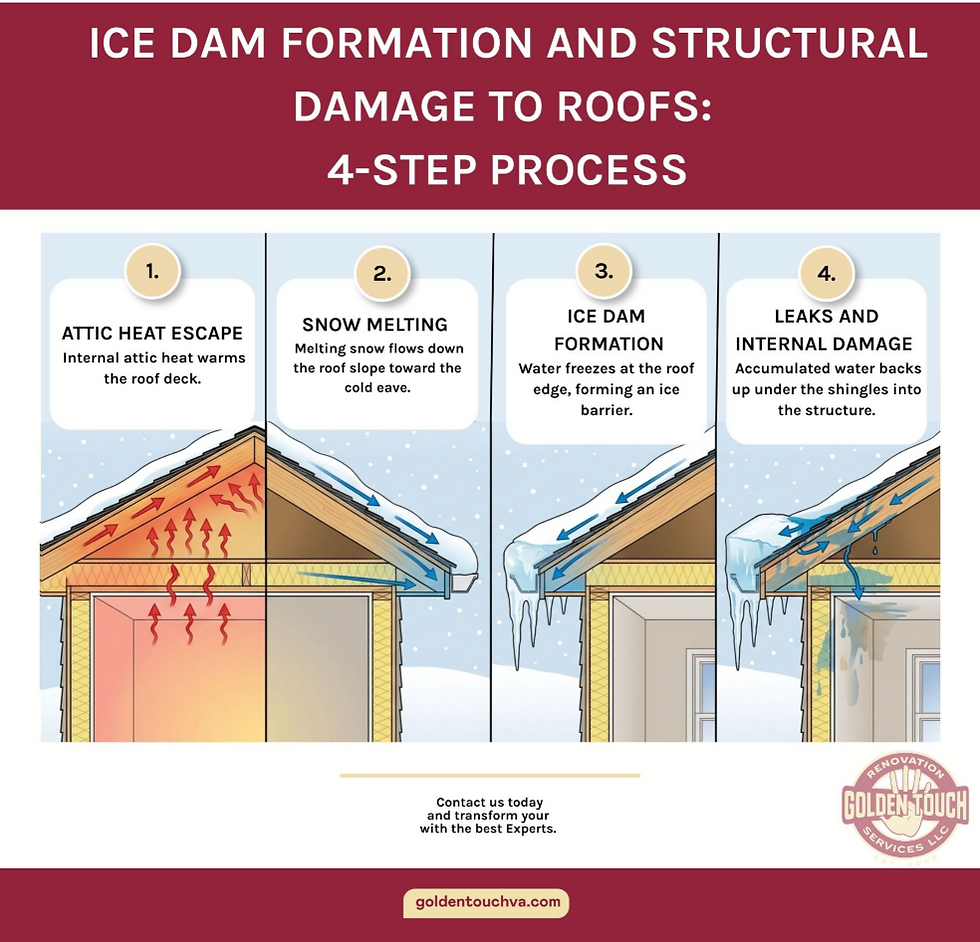
When indoor heat escapes into an uninsulated attic, it melts snow on the upper roof deck. That water runs down to the cold eave, refreezing into an ice dam that backs up underneath shingles. While large ice dams occur less frequently in Northern Virginia than in northern states, they develop during prolonged cold spells following heavy snowfall. Check for loose shingles, inspect chimney flashings, and confirm that attic soffit vents remain unobstructed.
3. Shut Down Outdoor Plumbing and Irrigation
Leaving a hose connected to an outdoor sillcock traps water inside the spigot body. When frozen, expanding ice splits the supply line inside the wall cavity, leading to unseen leaks once temperatures rise.
Take these steps before mid-October:
Disconnect all garden hoses.
Drain remaining water from hoses and store them indoors
Shut off interior cut-off valves supplying outdoor spigots, if installed.
Open exterior hose bibs to drain lingering moisture, leaving them open.
Schedule a blow-out service for automatic sprinkler lines.
4. Seal Exterior Envelopes
Gaps around window frames, door trim, utility penetrations, and cable pass-throughs admit cold air and water into wall cavities. Inspect these points from the outside; rot often starts behind siding or exterior trim long before showing up on interior walls.
Replace dried or failing caulk, seal utility entry points, and repair open joints where contrasting materials meet, such as brick-to-siding transitions. Apply caulking during moderate October temperatures so sealants cure properly before freezing weather arrives.
5. Secure Decks, Porches, and Entries
Water trapped between deck boards or beneath planters expands during freezes, splitting wood fibers and accelerating rot. Clear leaves from deck seams, tighten loose railings, replace soft boards, and ensure proper drainage on all flat surfaces to minimize slip hazards during winter storms.
Addressing Moisture Source Points Early
Gutter overflows lead to saturated ground, cold weather degrades deteriorating caulking, and trapped moisture works its way toward structural framing or insulation. By the time an interior water stain appears, the underlying damage is already widespread. Addressing exterior maintenance items during clear fall weather avoids emergency repairs during winter freezes.
Professional Exterior Services
While draining hoses and clearing low gutters are simple DIY tasks, complex items call for professional help: replacing high roof flashings, repairing rotted fascia boards, fixing damaged siding, or correcting severe foundation grading.
Golden Touch Renovation Services brings over 15 years of residential remodeling experience to homes across Fairfax, Arlington, Alexandria, Woodbridge, Stafford, Springfield, Vienna, Lorton, and Falls Church. We diagnose root-cause drainage, roofing, and structural issues to implement lasting exterior solutions backed by our warranty.
Frequently Asked Questions (FAQ)
When does Northern Virginia experience its first freeze?
First freezes typically occur between mid-October and mid-November, depending on local microclimates and proximity to urban heat islands.
How far should downspouts extend from a foundation?
Downspouts should discharge runoff several feet away from the foundation perimeter, allowing soil to slope gently downward away from the structure.
What causes wood rot around exterior window frames?
Water enters through hairline cracks in failing caulk or flashing, becoming trapped within the wall assembly where it breaks down the wood from the inside out.
What steps should be taken if an exterior pipe freezes?
Shut off the main water valve immediately, open the affected spigot to relieve pressure, and apply gentle heat using warm air. Avoid open flames. If the pipe bursts, contact a licensed plumber.
Protect Your Home Before the Cold Arrives
Staying ahead of freezes preserves your property value and prevents headaches during the coldest months of the year in Northern Virginia. If you need an expert evaluation of your roof, exterior, drainage, or deck, our team is ready to help.
Schedule your technical consultation at goldentouchva.com
📞 (571) 332-0968 · 📧 info@goldentouchva.com · 📍 3051 PS Business Center Drive, Woodbridge, VA 22192 · Serving Northern Virginia with over 15 years of experience.


Comments